
What Should I Look for When Hiring a Plumber?
When hiring a plumber, look for proper licensing, insurance, relevant experience, transparent pricing, good customer reviews, clear communication, and warranties. Before approving work, ask about service-call fees, labor rates, minimum charges, estimated completion times, and what happens if additional problems are discovered.
Choosing a plumber is about more than finding the cheapest price. A qualified professional should diagnose the problem accurately, explain the recommended solution, perform safe and reliable work, and stand behind the service.
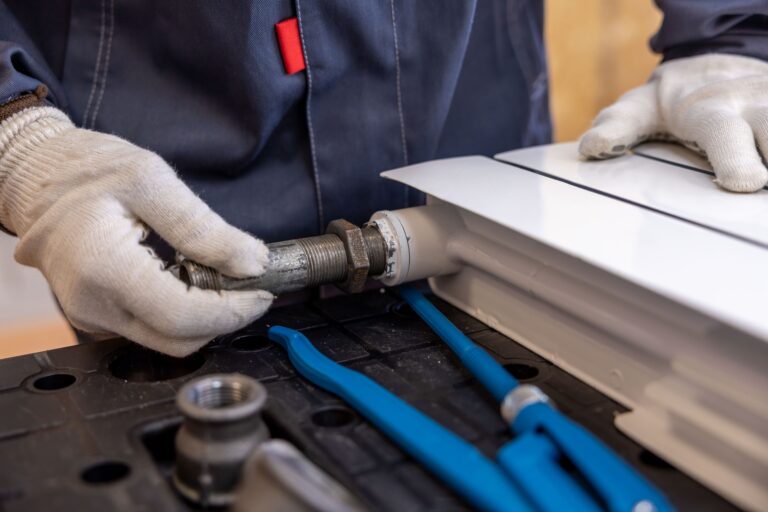
Check Licensing and Credentials
Make sure the plumber has the licenses or credentials required for your location and type of project. Requirements vary by state and municipality.
For larger jobs, ask about the company’s qualifications and the experience of the plumber who will actually perform the work.
Verify Insurance
Ask whether the plumbing company carries appropriate liability insurance and workers’ compensation coverage.
Plumbing work can involve water damage, tools, equipment, and potentially hazardous conditions. Proper insurance helps protect both the homeowner and plumbing company if an accident or property damage occurs.
Look for Relevant Experience
Choose a plumber with experience handling your specific problem. Residential service plumbers may specialize in leaks, toilets, faucets, water heaters, and drains, while others focus on commercial systems, new construction, or sewer work.
For specialized repairs, ask whether the plumber regularly performs that type of service.
Read Customer Reviews
Reviews can provide valuable insight into a plumbing company’s reliability. Look beyond the overall rating and read several recent reviews.
Pay attention to comments about:
- Communication and punctuality
- Pricing and unexpected charges
- Workmanship
- Professionalism
- Cleanliness
- Responsiveness
- Follow-up service
A few negative reviews aren’t necessarily a problem, but repeated complaints about poor communication, surprise fees, or unfinished work are worth considering.
Request a Written Estimate
A written estimate can help you understand the expected cost before significant plumbing work begins.
Depending on the project, it should identify labor, materials, equipment, service fees, permits, and other applicable costs.
Ask what could cause the price to change. If hidden damage is discovered, the plumber should explain the issue and discuss additional costs before performing extra work whenever practical.
Understand the Pricing Structure
Plumbers commonly use one of three pricing methods:
Hourly Pricing
You pay a set labor rate for each hour worked.
Flat-Rate Pricing
You receive a predetermined price for a specific repair or service.
Service Fee Plus Labor
You pay a service or diagnostic fee, followed by labor and material charges.
The important thing is understanding how you’ll be charged before work starts.
Ask About Service and Minimum Fees
Ask, “How much is the service call, and what does it include?”
Some companies charge a trip or diagnostic fee, while others may apply that fee toward the repair.
Also ask whether there is a minimum labor charge. A company may charge for one or two hours even if the repair takes less time.
Evaluate Communication
A professional plumber should clearly explain:
- What is wrong
- What caused the problem
- What repair is recommended
- How much it should cost
- How long the work may take
- Whether additional repairs may be needed
You don’t need to understand technical plumbing terms. A good plumber should explain the situation in straightforward language.
Ask About Warranties
Find out whether the company offers a workmanship warranty and whether parts or equipment have manufacturer warranties.
Ask how long coverage lasts, what it includes, what is excluded, and who to contact if a problem occurs after the repair.
A clear warranty policy can provide additional confidence in the company’s work.
Check Availability and Emergency Rates
For urgent plumbing problems, response time matters. Ask when the plumber can arrive and whether emergency service is available.
If you need service at night, on weekends, or during holidays, ask whether different emergency rates apply.
For a burst pipe or major leak, prompt professional service may help limit water damage.
Consider Local Experience
A local plumbing company may be familiar with common plumbing systems, property types, and issues in the area.
If you live in Doylestown, PA, choosing a plumber that regularly serves Doylestown can make scheduling, communication, and future service more convenient.

Questions to Ask Before Hiring a Plumber
Before scheduling service, consider asking:
- Are you licensed and insured?
- How much is the service-call fee?
- Do you charge hourly or use flat-rate pricing?
- Is there a minimum labor charge?
- What does the estimate include?
- Can the price change if additional problems are found?
- Will you contact me before doing additional work?
- Do you provide a workmanship warranty?
- How soon can you start?
- What payment methods do you accept?
A professional should be comfortable answering reasonable questions about pricing, qualifications, and services.
What Makes a Plumber Reliable?
|
Quality |
Why It Matters |
|
Proper credentials |
Shows appropriate qualifications |
|
Insurance |
Helps protect against certain risks |
|
Experience |
Supports accurate diagnosis and repairs |
|
Transparent pricing |
Reduces unexpected charges |
|
Good communication |
Keeps you informed |
|
Positive reviews |
Provides insight into customer experiences |
|
Written estimates |
Clarifies cost and scope |
|
Warranty |
Provides additional protection |
|
Punctuality |
Makes service easier to manage |
No single factor guarantees perfect service, so consider several qualities together.
Should You Choose the Cheapest Plumber?
Not necessarily.
A low estimate may exclude important materials, labor, or services. Another plumber may charge more because of better materials, greater experience, stronger warranties, or a more comprehensive scope of work.
Instead of asking only, “Who is cheapest?”, ask, “What exactly am I getting for this price?”
Compare the scope of work, materials, labor, warranty, timeline, and qualifications rather than the final price alone.
When Should You Get Multiple Estimates?
For large, non-emergency projects, getting two or three estimates can be useful. This may include:
- Whole-house repiping
- Sewer line replacement
- Major water line repairs
- Water heater replacement
- Extensive bathroom renovations
- Large commercial plumbing projects
For active leaks or burst pipes, however, delaying repairs just to collect multiple estimates could increase property damage.
Red Flags When Hiring a Plumber
Watch for warning signs such as:
- Unclear pricing: The plumber won’t explain how you’ll be charged.
- Large upfront payments: Be cautious about substantial payments without a written agreement.
- Missing credentials: The plumber refuses to provide relevant licensing or insurance information.
- High-pressure sales: You’re pushed to approve expensive work without an explanation.
- Unexplained price changes: Additional charges appear without discussion or approval.
- No invoice: You aren’t provided documentation of the work and charges.
How to Prepare for the Plumbing Visit
Before the plumber arrives, note when the problem started, which fixtures are affected, whether it’s getting worse, and any unusual noises or odors.
Also provide information about previous repairs and the approximate age of the plumbing system. Clear access to the affected area and know where your main water shutoff valve is located.
FAQs About Hiring a Plumber
What is the most important thing to look for when hiring a plumber?
Look for proper credentials, insurance, relevant experience, transparent pricing, positive reviews, and professional communication. Don’t base your decision solely on price.
How do I know if a plumber is trustworthy?
A trustworthy plumber should explain the problem clearly, provide understandable pricing, answer your questions, and avoid pressuring you into unnecessary work. Reviews can also help you evaluate the company’s reputation.
Should I get a written estimate?
Yes, especially for large or complicated projects. A written estimate clarifies the expected scope of work and cost before the job begins.
Should I hire a plumber based on reviews?
Reviews are helpful, but they shouldn’t be the only factor. Consider them alongside experience, credentials, pricing, warranties, and communication.
Is it better to hire a local plumber?
A local plumber can provide convenient service and may understand common plumbing systems and property types in the area. Local availability can also be valuable when you need prompt assistance.
Conclusion
When hiring a plumber, look for proper licensing and insurance, relevant experience, transparent pricing, positive reviews, clear communication, and warranties. Ask about service-call fees, minimum charges, emergency rates, materials, and additional work before approving a repair.
Don’t automatically choose the lowest estimate. Compare the complete scope of work, qualifications, workmanship, warranty, and overall value.
If you need a dependable plumber in Doylestown, PA, Onpoint Plumbing & Heating can help with plumbing repairs, maintenance, installations, leaks, drains, and other residential plumbing needs. Call 267-263-7673 to discuss your plumbing problem and schedule professional service.
For reliable plumbing in Doylestown PA, choose a team that takes time to understand your needs and explain the recommended work. Contact Onpoint Plumbing & Heating at 267-263-7673 when you need experienced plumbers in Doylestown PA.